Treatments
Wisdom Tooth Pain: Causes, Quick Relief, and When It Needs to Come Out
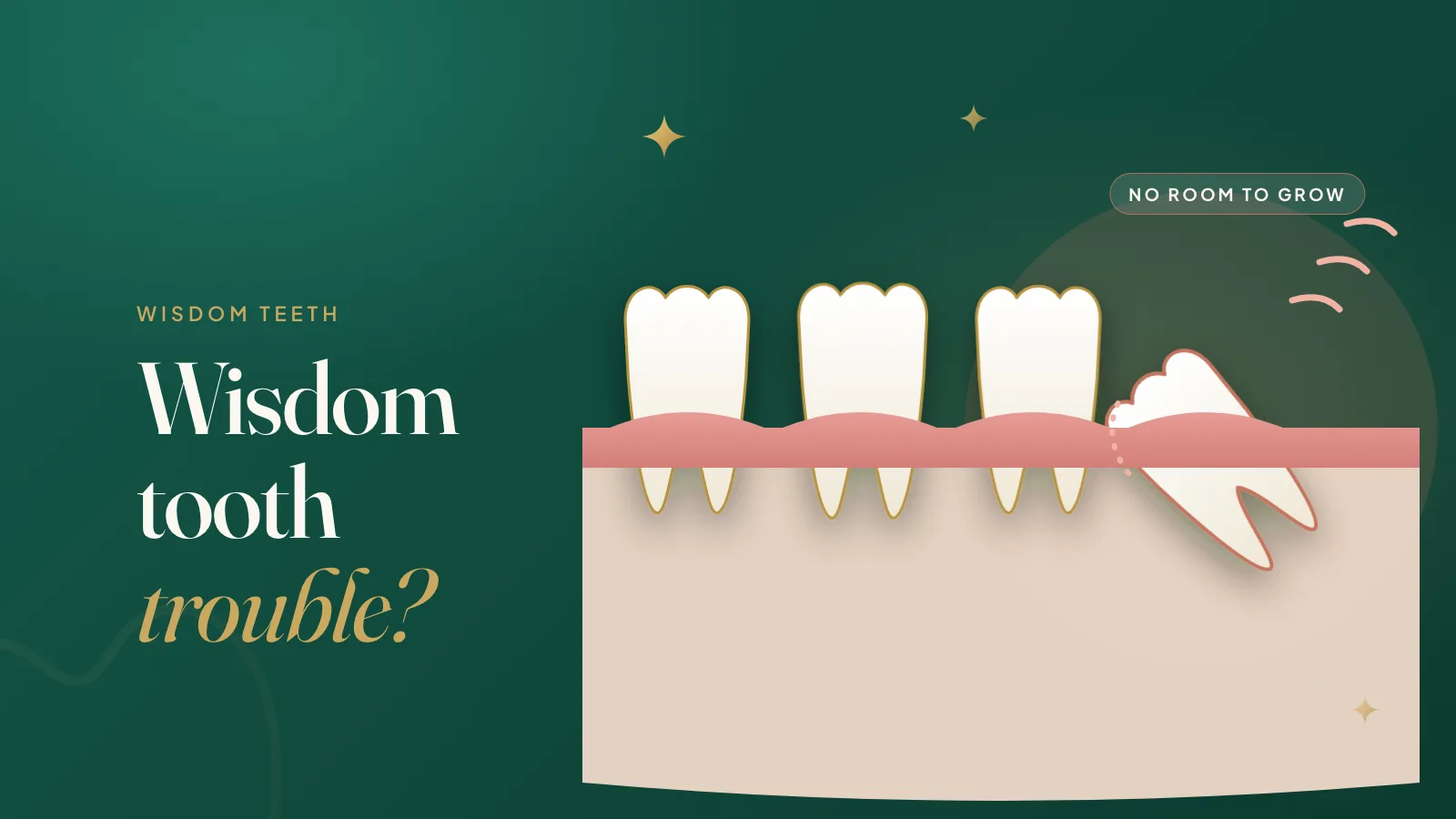
It often starts as a dull ache at the very back of your mouth. Then the gum there feels puffy, chewing on that side hurts, and maybe it's hard to open your mouth fully. Wisdom tooth pain is one of the most common reasons people message us, usually somewhere between their late teens and late twenties.
The good news: it's very treatable, and not every wisdom tooth needs to come out. Here's what's going on, what helps in the meantime, and how to tell when it can't wait.
What are wisdom teeth?
Wisdom teeth are your third molars, the last teeth at the very back of each side of your upper and lower jaw. They usually come through between about 17 and 25, long after the rest of your adult teeth. Some people have all four, some have fewer, and some never get any.
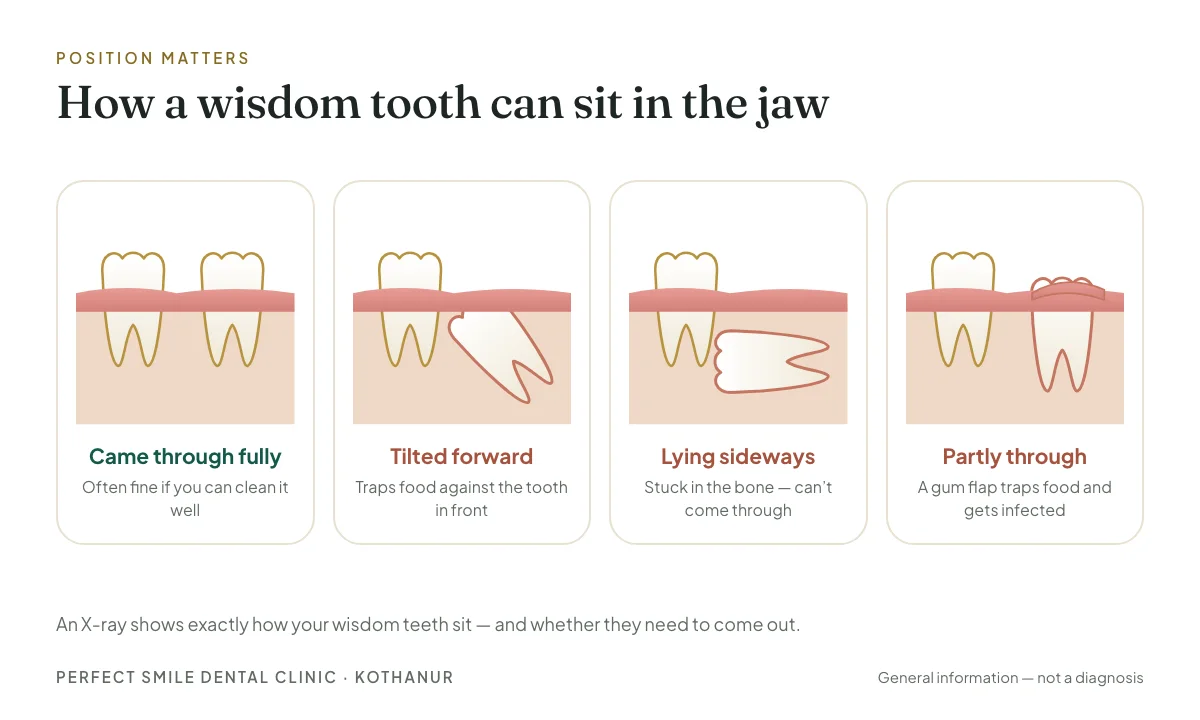
Many people's wisdom teeth come through without fuss. Problems start when there isn't enough room in the jaw. The tooth may then come in at an angle, get stuck partway through the gum, or stay buried in the bone. A tooth that can't come through fully is called impacted.
Why wisdom teeth hurt
- Gum infection (pericoronitis). This is the most common cause. When a wisdom tooth is partly through, a flap of gum sits over it. Food and bacteria collect underneath, and the gum becomes red, swollen and sore. You may notice a bad taste, bad breath, pain when you bite, or difficulty opening your mouth.
- Decay. Wisdom teeth are hard to reach with a brush, so they decay easily. So does the back of the molar in front, if a tilted wisdom tooth traps food against it.
- Pressure on the neighbouring tooth. A wisdom tooth growing at an angle can push against the molar in front and cause an ache that spreads.
- Breaking through the gum. As a tooth erupts, the gum over it can be tender for a few days. This kind of discomfort often settles on its own.
- Cysts. Less commonly, a fluid-filled sac can form around a buried wisdom tooth and damage the bone. It's usually spotted on an X-ray.
Wisdom tooth pain can also spread to your ear, jaw joint, throat or the side of your head. It's easy to mistake for an earache or a sore throat.
Quick relief while you wait to see a dentist
These steps ease the pain and help a mild gum infection settle. They don't fix the cause, so use them to get through a day or two until your appointment:
- Warm salt-water rinses. Dissolve half a teaspoon of salt in a glass of warm water. Swish gently around the back of your mouth several times a day, especially after eating.
- Keep it clean. Brush carefully right to the back with a soft toothbrush, even if the gum is sore. Leftover food under the gum flap makes infection worse.
- Pain relief. Use over-the-counter pain relief exactly as directed on the pack or by your pharmacist. Don't put a tablet against the gum. Aspirin and similar tablets can burn the soft tissue.
- Cold compress. Hold an ice pack wrapped in a cloth against the outside of your cheek, about 15 minutes at a time, to reduce swelling.
- Eat on the other side. Stick to soft food such as idli, curd rice, khichdi, dal and bananas, and skip very spicy, hard or crunchy food for now.
Please don't take leftover antibiotics from an old prescription. Antibiotics only help some infections, they don't remove the cause, and using them without a diagnosis can make future infections harder to treat. We'll prescribe them if you need them.
Signs it can't wait
Contact a dentist the same day if you have:
- Swelling in your gum, cheek or jaw that's getting bigger
- Pain that stops you sleeping or isn't eased by pain relief
- Difficulty opening your mouth
- A fever, or pus or a foul taste from around the tooth
Go to a hospital emergency department straight away if swelling is spreading down your neck or towards your eye, or you have difficulty breathing or swallowing.
We keep room for same-day emergency appointments for dental pain. Message us on WhatsApp as early as you can, and we'll do our best to see you that day.
Does your wisdom tooth need to come out?
Not necessarily. A wisdom tooth that has come through fully, is healthy, bites properly and can be cleaned well can often stay put. We look at the tooth and an X-ray, usually a panoramic OPG that shows the whole jaw. We usually recommend removal when a wisdom tooth is:
- Causing repeated gum infections (pericoronitis that keeps coming back)
- Decayed beyond sensible repair, or causing decay in the tooth in front
- Damaging the neighbouring tooth or its roots
- Associated with a cyst or other changes in the bone
- Causing pain that keeps returning
If a wisdom tooth is impacted but causing no problems, we may simply keep an eye on it at your regular check-ups. For a sudden flare-up, we'll often treat the infection first and then plan removal once things have calmed down.

What wisdom tooth removal involves
Wisdom tooth removal is one of the most common procedures we carry out, and for most people it's done in a single visit at the clinic under local anaesthetic:
- Assessment. We examine the tooth and take an X-ray to see its position, its roots and how close they sit to the nerve in the lower jaw.
- Numbing. The area is completely numbed. You'll feel pressure and pushing but shouldn't feel pain.
- Removal. A tooth that has come through can often be removed much like any other extraction. An impacted tooth may need a small cut in the gum, and sometimes the tooth is divided into pieces so it comes out more gently. This is minor oral surgery.
- Stitches and gauze. Dissolvable stitches may be placed. You'll bite on gauze to help a clot form, then go home with clear aftercare instructions.
The procedure itself can take anywhere from a few minutes for a straightforward tooth to longer for a deeply impacted one. We'll tell you what to expect for your tooth beforehand.
Recovery: what to expect, day by day
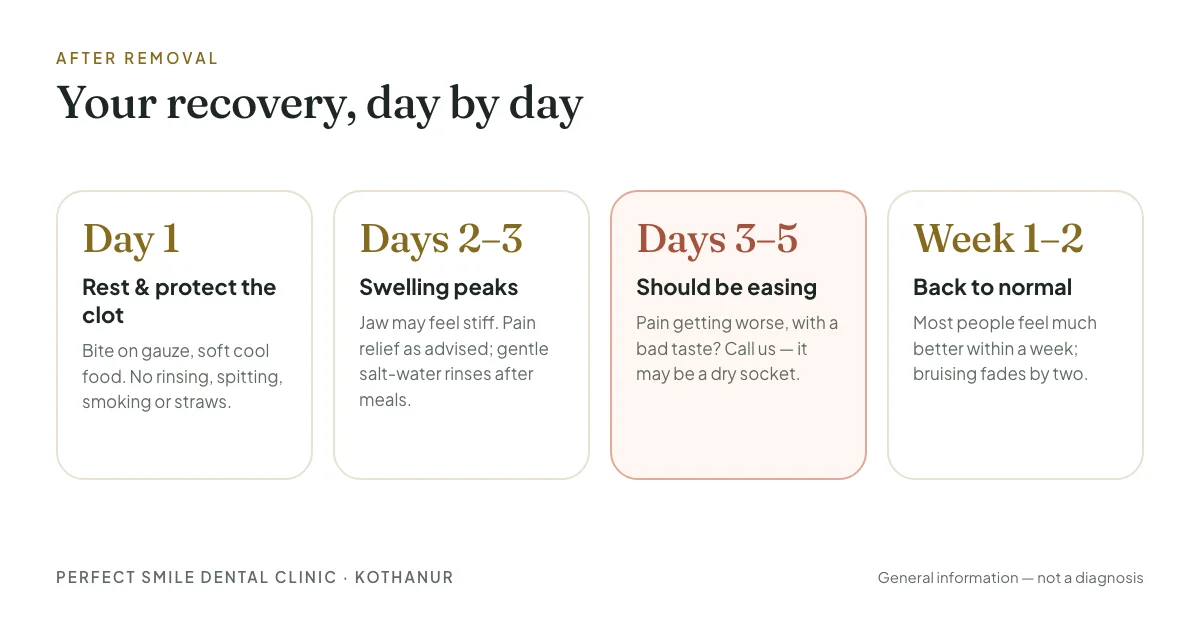
- The first day. Rest, keep your head slightly raised, and bite on gauze if there's oozing. Don't rinse, spit forcefully, smoke or drink through a straw. These can dislodge the clot. Eat soft, cool food once the numbness wears off.
- Days two and three. Swelling and jaw stiffness are usually at their worst. Use pain relief as advised, and from the second day start gentle warm salt-water rinses after meals.
- Days three to five. Pain should be steadily easing. If it gets worse instead, especially with a bad taste or smell, call us. It may be a dry socket.
- Week one to two. Most people are back to normal food and routine within a week. Bruising and the last of the stiffness can take up to two weeks to fade.
Good foods for the first few days include curd rice, idli, upma, khichdi, mashed potato, dal, smoothies, and payasam or kheer once it has cooled. Leave out hot, spicy, crunchy and chewy food until the area has healed.
What is a dry socket?
After a tooth comes out, a blood clot forms in the socket to protect the bone while it heals. If the clot is lost or doesn't form properly, the bone is left exposed. That's a dry socket. It's more common after lower wisdom teeth and in people who smoke.
The tell-tale sign is pain that gets worse a few days after the extraction rather than better. It's often throbbing, spreads towards the ear, and comes with a bad taste or smell. It isn't dangerous, and it's easily treated. We clean the socket and place a soothing dressing, which usually brings quick relief.
To lower your risk: don't smoke for as long as you can before and after, avoid rinsing, spitting and straws for the first 24 hours, and follow your aftercare instructions.
Worried about a wisdom tooth?
If you have pain or swelling at the back of your mouth, don't wait for it to get worse. At Perfect Smile in Kothanur we'll examine the tooth, take an X-ray if needed, and give you an honest answer about whether it needs to come out, with the plan and cost explained clearly before any treatment begins.
Quick answers
Frequently asked questions
Why does my wisdom tooth hurt?
The most common reason is pericoronitis: a flap of gum over a partly erupted wisdom tooth traps food and bacteria, and the gum becomes swollen, sore and infected. Wisdom teeth can also hurt because they're decayed, pushing against the tooth in front, or simply breaking through the gum. An examination and X-ray show which it is.
How long does wisdom tooth pain last?
Pain from a tooth breaking through the gum can come and go over a few days. Pain from an infection or decay usually doesn't go away on its own, or keeps coming back. If the pain lasts more than two or three days, keeps returning, or comes with swelling, see a dentist.
How can I relieve wisdom tooth pain at home?
Rinse gently with warm salt water several times a day, keep the area clean with a soft toothbrush, eat soft food on the other side, and use over-the-counter pain relief exactly as directed on the pack or by your pharmacist. A cold compress on the outside of your cheek can help with swelling. These ease symptoms but don't treat the cause, so book a dental visit.
When is wisdom tooth pain an emergency?
Get urgent help if you have swelling spreading across your face, jaw or neck, difficulty swallowing or breathing, a high temperature, or you can't open your mouth properly. Difficulty breathing or swallowing needs a hospital emergency department straight away.
Do all wisdom teeth need to be removed?
No. Wisdom teeth that have come through fully, are healthy and can be cleaned properly can often stay. Removal is usually advised when a wisdom tooth causes repeated infections, decay, damage to the neighbouring tooth, cysts, or pain that keeps returning.
Does wisdom tooth removal hurt?
The area is completely numbed with local anaesthetic, so you should feel pressure and pushing but not pain during the procedure. Soreness and swelling afterwards are normal; they usually peak around the second or third day and are managed with the pain relief and aftercare your dentist advises.
How long does it take to recover from wisdom tooth removal?
Most people feel much better within about a week, though it can take up to two weeks to fully recover, especially after a more difficult surgical removal. Swelling and jaw stiffness are usually worst on days two and three. Many people take a day or two off work.
What is a dry socket?
A dry socket happens when the blood clot that should protect the socket is lost or doesn't form properly, leaving the bone exposed. It causes pain that gets worse rather than better, usually three to five days after the extraction, often with a bad taste or smell. Smoking raises the risk. If you think you have one, contact your dentist — it's easily treated with a soothing dressing.
How much does wisdom tooth removal cost in Bengaluru?
It depends on the tooth's position, whether it can be removed simply or needs a surgical approach, the X-rays required and how many teeth are involved. A fair figure can only be given after an examination and X-ray. At Perfect Smile we explain the plan and the cost clearly before any treatment begins.
Sources & further reading
This article is general information, not a diagnosis or a substitute for a dental examination. Every mouth is different — please see a dentist about your own situation.
Come and see us in Kothanur
Book a visit with Dr. Shilpa and the team — we’ll take a look, explain what we find in plain language, and talk you through your options. No pressure.
Keep reading
All articles Treatments
Living With Invisalign: Wearing, Eating, Cleaning and What to Expect
Just started clear aligners, or about to? A practical guide to daily life with Invisalign — how long to wear them, eating and drinking, cleaning, the first week and what to do if something goes wrong.
Read article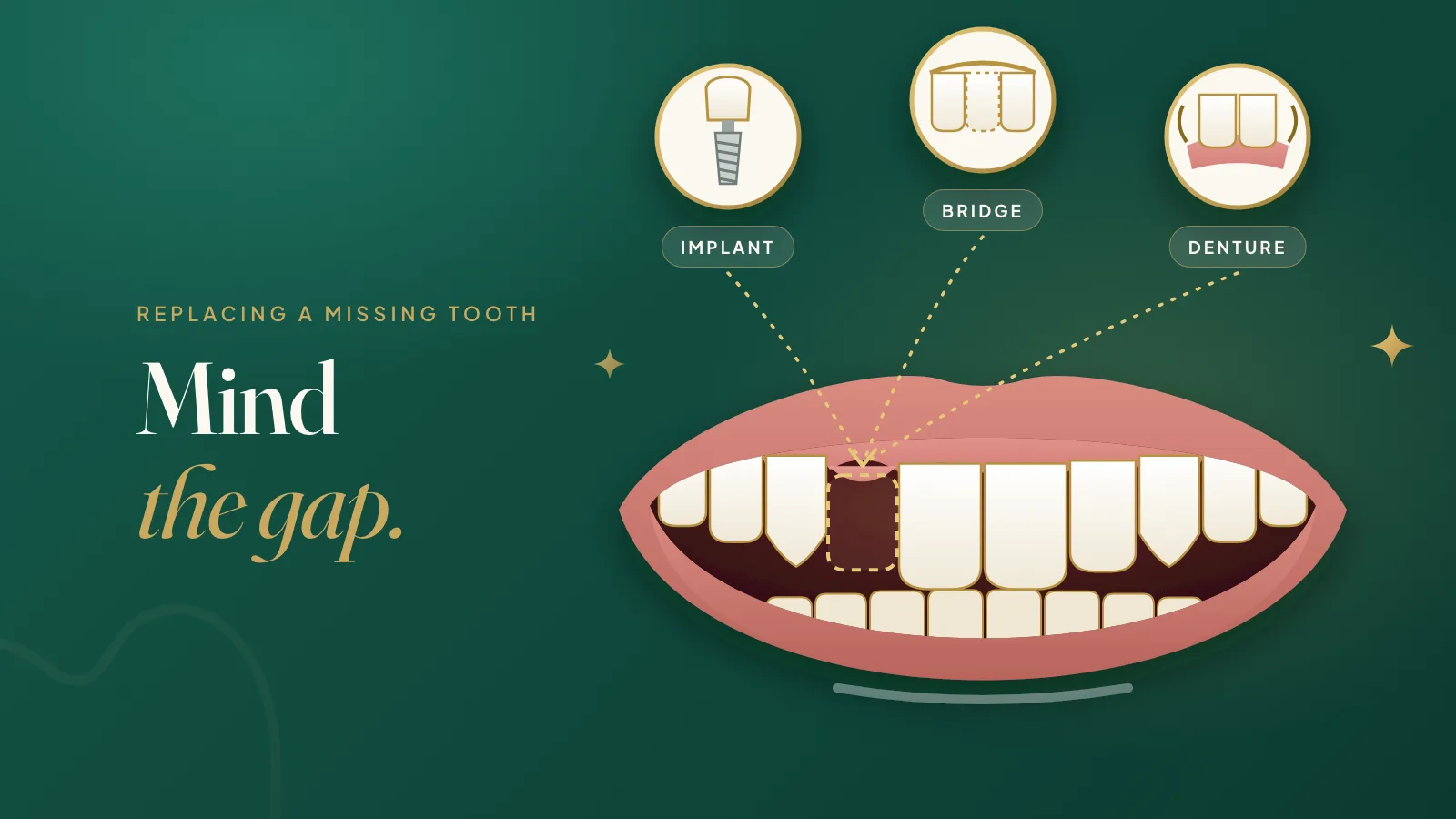 Treatments
Missing a Tooth? Dental Implant vs Bridge vs Denture, Compared
Lost a tooth, or about to? A clear, side-by-side look at implants, bridges and dentures — how each works, how long it takes, how long it lasts and who it suits.
Read article