Treatments
Living With Invisalign: Wearing, Eating, Cleaning and What to Expect
So you've decided on clear aligners — or you're close to it. Most people who choose Invisalign do so because it's discreet and removable. Being removable is also the catch: aligners only work while they're in your mouth. How you live with them day to day decides how well, and how quickly, your treatment goes.
If you're still deciding between aligners and fixed braces, start with our side-by-side guide, Braces vs Invisalign for Adults. This article is the practical follow-up: what life with aligners actually looks like.
How many hours a day should you wear them?
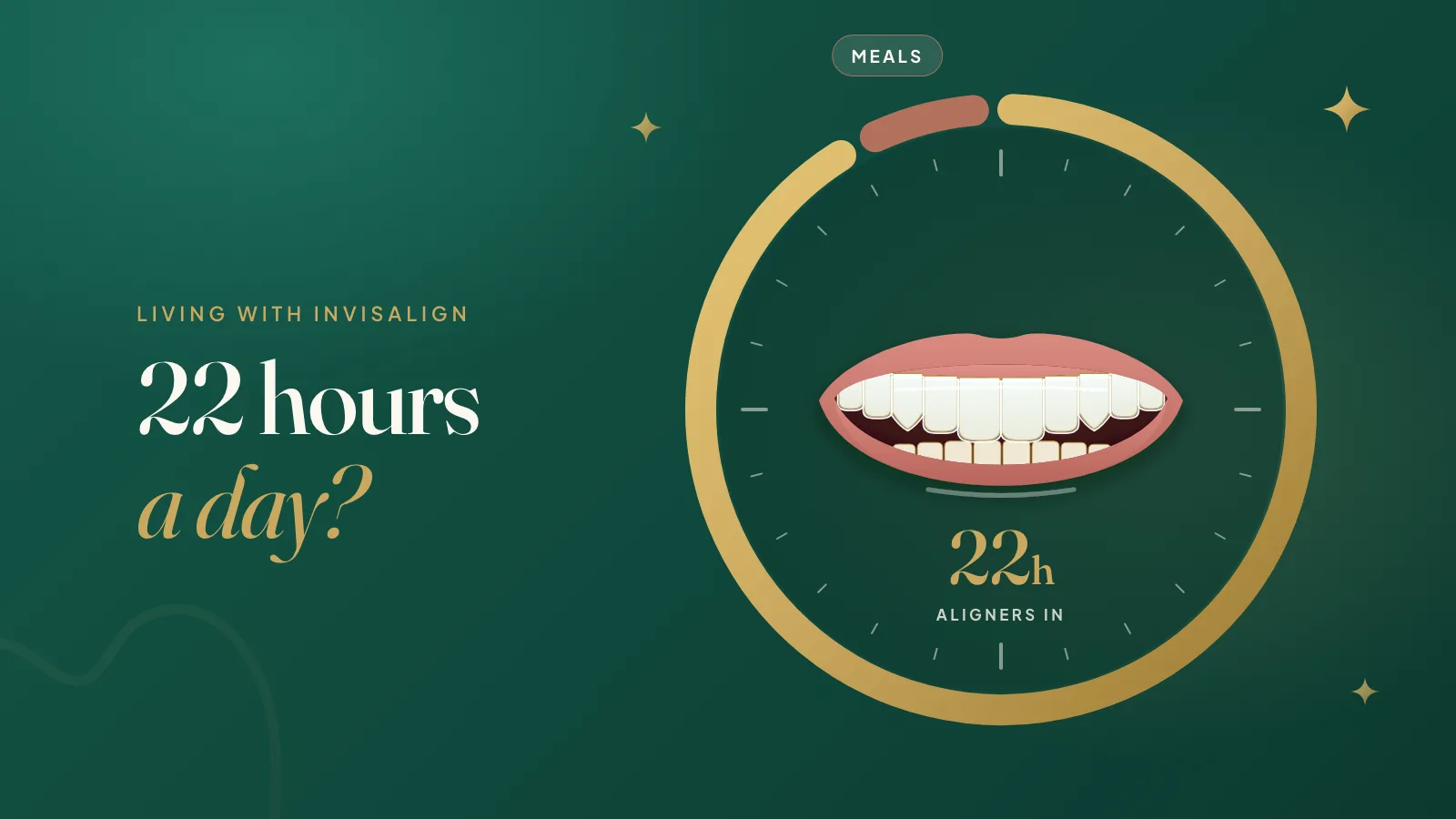
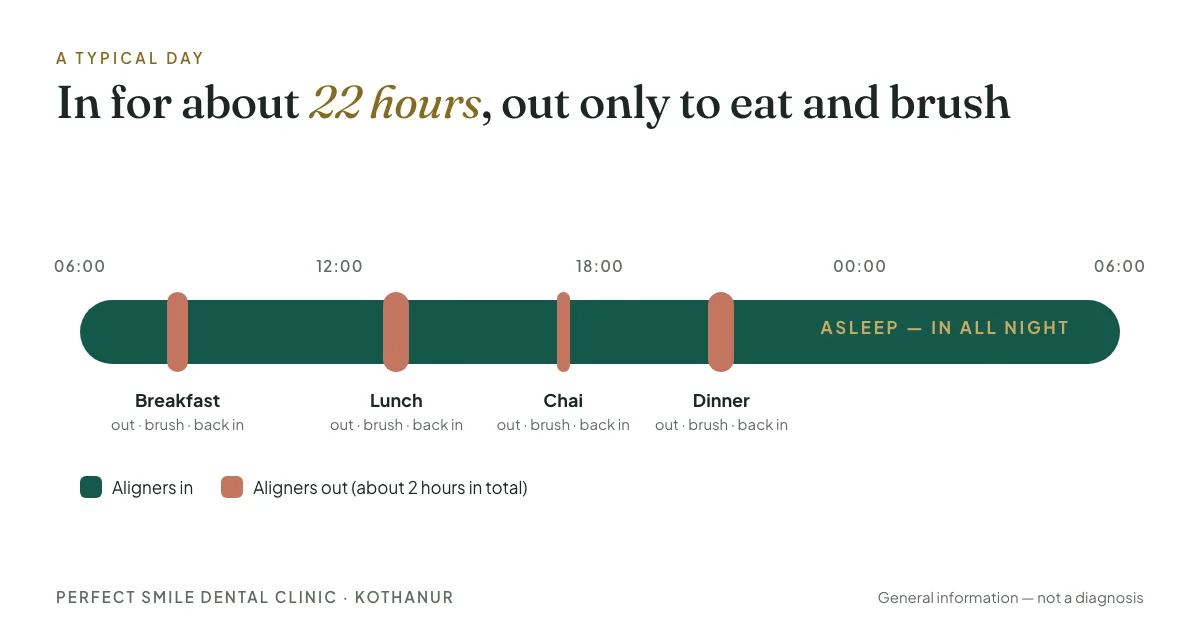
Plan on about 20–22 hours a day. Many orthodontists aim for 22. That leaves roughly two hours for meals, drinks and brushing, and nothing else.
Each aligner moves your teeth only a fraction of a millimetre, and you switch to the next set every week or two, as your dentist directs. If you regularly leave the trays out for longer, teeth fall behind the plan, the next set won't fit properly, and treatment takes longer than it should.
A few habits make 22 hours easy:
- Keep meals together. Grazing all day means taking the trays out again and again. Fewer, proper meals protect your wear time.
- Put them straight back in. Brush, then aligners, then everything else.
- Use reminders. A phone alarm after lunch, or the timer in the My Invisalign app, stops "I'll put them back in a minute" turning into an hour.
Eating and drinking with aligners
There's no list of banned foods with Invisalign, because the trays come out every time you eat. Biryani, dosa, corn on the cob and an apple are all fine, as long as the aligners are in their case and not in your mouth.
Drinks need more thought:
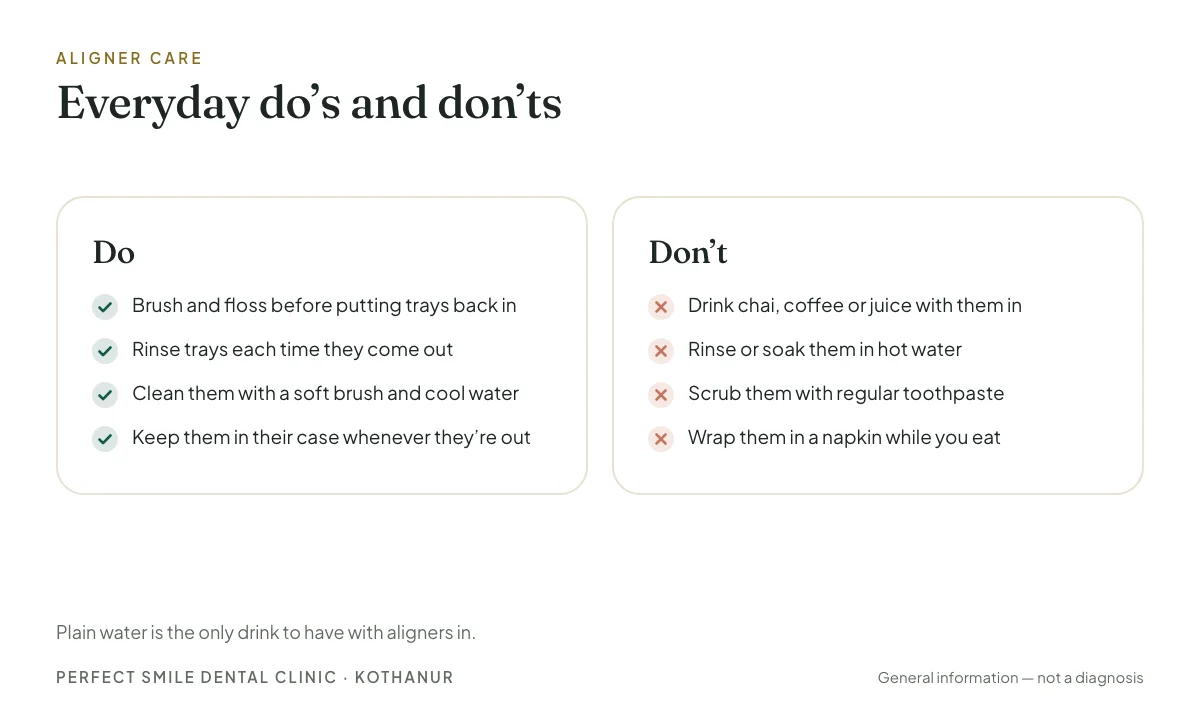
- Plain water is the only thing to drink with aligners in.
- Chai, coffee and other hot drinks: take the aligners out. Heat can warp the plastic, and tea and coffee stain both the trays and the attachments on your teeth.
- Juices, soft drinks and sweetened lassi: take the aligners out. Trapped under a tray, sugar and acid sit against your enamel for hours, which raises the risk of decay.
- After eating or drinking anything else: brush, or at least rinse well with water, before putting the trays back in. Otherwise food is sealed against your teeth.
If you sip chai through the afternoon, pick a time to have it, so the aligners are out once rather than all day.
Keeping your aligners (and teeth) clean
Clean teeth and clean trays go together. Here's a simple routine:
- Rinse the aligners each time you take them out, so saliva and plaque don't dry on.
- Brush them gently once or twice a day with a soft toothbrush and cool or lukewarm water. A clear, unscented soap or a dedicated aligner cleaner helps; regular toothpaste is slightly abrasive and can leave them scratched and cloudy.
- Never use hot or boiling water. It can warp the plastic so the trays no longer fit.
- Brush and floss your teeth before putting the aligners back in, paying extra attention around any attachments.
- Always use the case. Most lost aligners are wrapped in a napkin at a restaurant and thrown away, or found by the family dog.
Keep up your regular check-ups and cleanings during treatment. Aligners make good hygiene more important, not less.
What the first week feels like
Most people adapt faster than they expect. A few things are normal at the start of treatment, and again for a day or two with each new set:
- Pressure or tightness. This means the aligners are doing their job. It usually fades within two or three days. Switching to a new set at bedtime lets you sleep through the tightest part.
- Tender teeth when chewing. Softer foods for a day or two help, and so does simple pain relief as your dentist advises.
- A slight lisp. Your tongue needs a few days to get used to the trays. Talking and reading aloud speed this up.
- More saliva for the first day or two, which settles on its own.
A sharp edge rubbing your cheek or tongue isn't something to put up with. Let us know, and we can smooth it.
Attachments, check-ups and "refinements"
Attachments are small, tooth-coloured bumps bonded to some teeth. They give the aligners something to grip, so teeth move more precisely. They're barely noticeable, and we polish them off at the end of treatment.
You'll see us every few weeks so we can check that teeth are tracking to plan. Some plans also include gently smoothing a little enamel between tight teeth to make space, which we explain beforehand if your plan needs it.
Near the end, some people need a refinement: a short extra series of aligners to fine-tune a few teeth. This is a normal part of many treatments, not a sign that something went wrong.
If something goes wrong
- Lost or broken aligner: call or WhatsApp us. Depending on where you are in your plan, we'll usually ask you to move on to your next set early or go back to your previous one while a replacement is made. Don't go days without wearing anything.
- An aligner that doesn't fit snugly: wear it consistently for a day or two. If there's still a gap between the tray and your teeth, tell us. Your teeth may be falling behind the plan.
- A missing attachment: keep wearing your aligners and let us know so we can replace it at your next visit.
After the last aligner: retainers
Teeth naturally tend to drift back after any straightening treatment, so a retainer is part of the treatment, not an optional extra. Most people wear one at night for the long term. It's the simplest way to protect the time and money you've put into your smile.
Thinking about Invisalign?
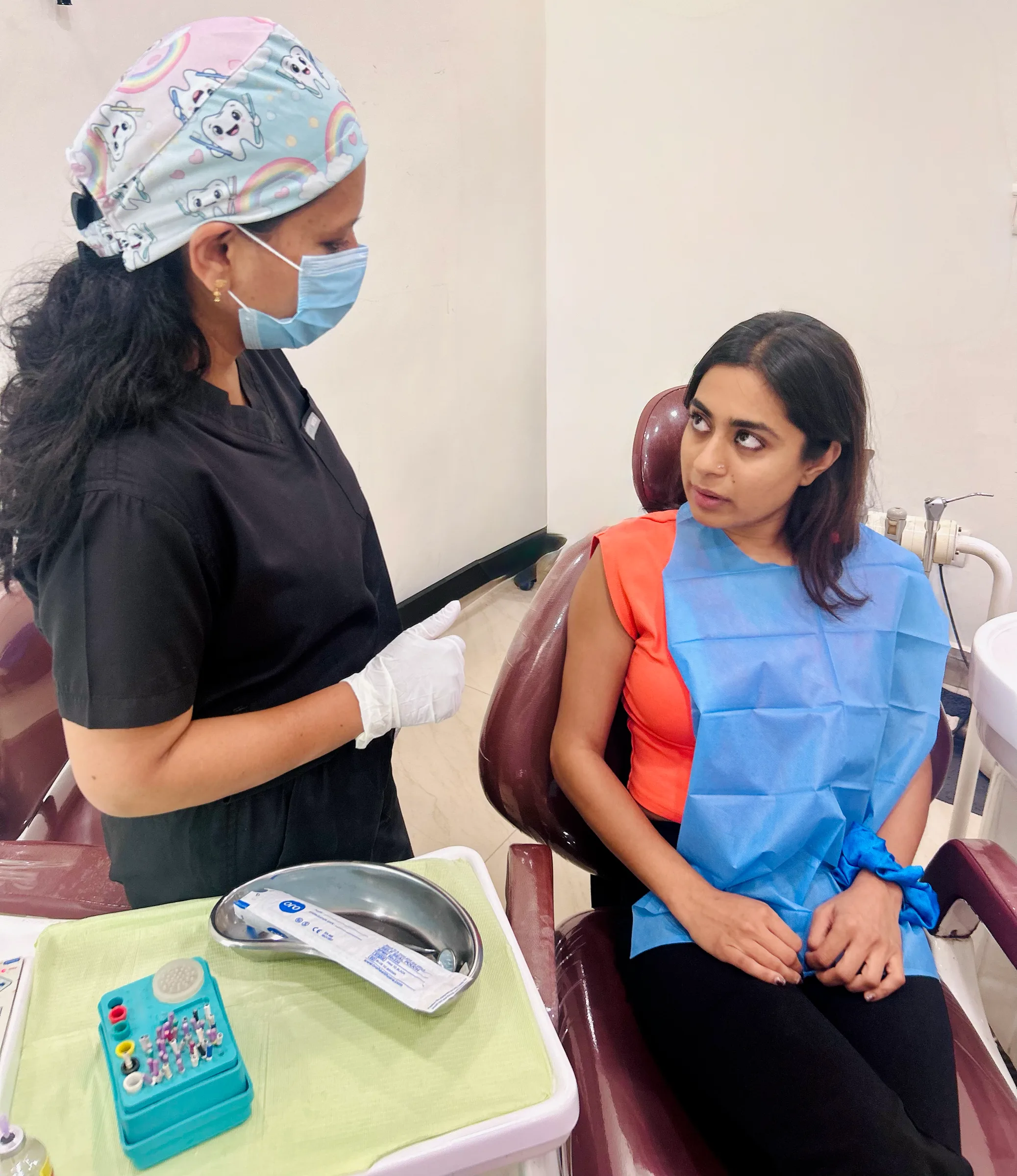
We offer Invisalign and clear aligners right here at the clinic in Kothanur. At a consultation we'll check whether aligners suit your teeth, show you how they're expected to move, and explain how long treatment is likely to take and what it will cost, with no pressure to decide on the day.
Quick answers
Frequently asked questions
How many hours a day do I need to wear Invisalign?
Most plans ask for about 20–22 hours a day, and many orthodontists aim for 22. Aligners only move teeth while they're in your mouth, so take them out just to eat, to drink anything other than plain water, and to brush. Follow the exact wear time your dentist gives you for your plan.
Can I drink tea or coffee with Invisalign in?
It's best not to. Hot drinks can warp the plastic, and tea, coffee and sugary or acidic drinks can seep under the trays, staining them and holding sugar and acid against your teeth. Take the aligners out for anything other than plain water, then rinse or brush before putting them back in.
Does Invisalign hurt?
Most people feel pressure or tightness for the first few days of each new set rather than pain. It's a sign the aligners are working and usually fades within two or three days. Switching to a new set at bedtime, soft foods and simple pain relief as advised by your dentist can help.
Will Invisalign make me lisp?
Some people notice a slight lisp for the first few days while the tongue gets used to the trays. It usually goes away within a week. Reading aloud or talking more than usual can help it settle faster.
How do I clean Invisalign aligners?
Rinse them whenever you take them out, and brush them gently once or twice a day with a soft toothbrush and cool or lukewarm water. Avoid hot water, which can warp them, and avoid regular toothpaste, which is slightly abrasive and can leave the trays scratched and cloudy. Your dentist may suggest a dedicated aligner cleaner for a regular soak.
What should I do if I lose or break an aligner?
Contact your dentist straight away. Depending on where you are in treatment, they may ask you to move on to your next set early or go back to your previous one while a replacement is made. Don't go without aligners for days, as teeth can start to move back.
What are the small bumps on my teeth for?
They're called attachments: small, tooth-coloured shapes bonded to some teeth that give the aligners something to grip, helping them move teeth more precisely. They're smoothed off painlessly when treatment finishes.
Do I still need a retainer after Invisalign?
Yes. Teeth naturally tend to drift back after any straightening treatment, so a retainer holds them in their new positions. Your dentist will tell you how long and how often to wear it — often at night for the long term.
Sources & further reading
- Invisalign — Week 1 vs week 2: your first two weeks
- American Association of Orthodontists — Clear aligners
This article is general information, not a diagnosis or a substitute for a dental examination. Every mouth is different — please see a dentist about your own situation.
Come and see us in Kothanur
Book a visit with Dr. Shilpa and the team — we’ll take a look, explain what we find in plain language, and talk you through your options. No pressure.
Keep reading
All articles Treatments
Missing a Tooth? Dental Implant vs Bridge vs Denture, Compared
Lost a tooth, or about to? A clear, side-by-side look at implants, bridges and dentures — how each works, how long it takes, how long it lasts and who it suits.
Read article Treatments
Braces vs Invisalign for Adults: Which Is Right for You?
Thinking about straightening your teeth as an adult? An honest, side-by-side look at fixed braces and clear aligners — how they work, how long they take and who each suits.
Read article