Treatments
Braces vs Invisalign for Adults: Which Is Right for You?
Adults get braces all the time now — before a wedding, after finally deciding to fix the gap or crowding they've lived with for years, or simply because they want to feel comfortable smiling in photos. The first question we're nearly always asked is: "Should I go for braces or Invisalign?"
The honest answer is "it depends" — but it's a lot less vague than it sounds. Here's how the two compare, so you can walk into your consultation knowing exactly what to ask.
How each one works
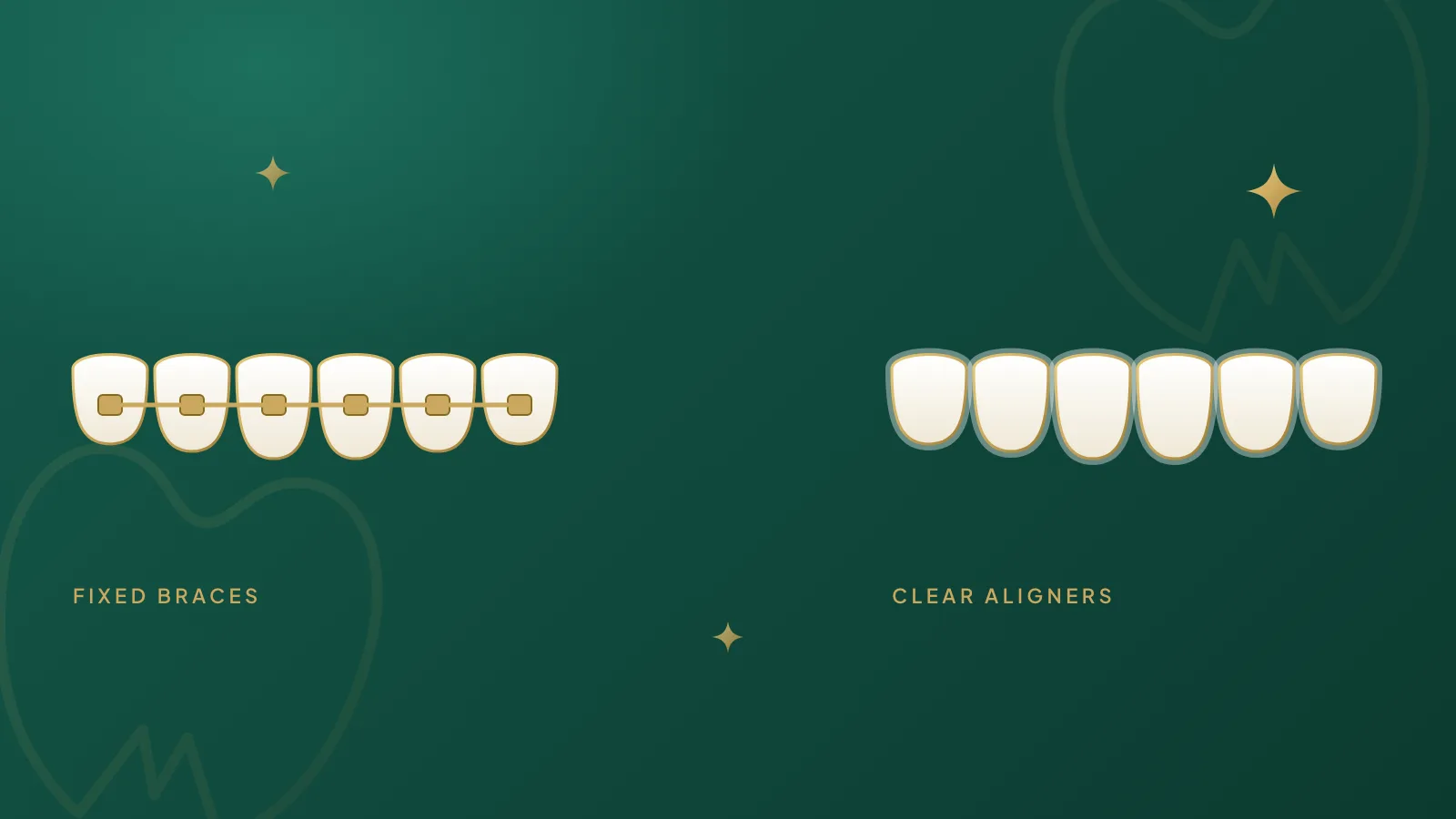
Fixed braces are small brackets bonded to the front of your teeth, joined by a wire that your dentist adjusts at regular visits. The wire applies gentle, continuous pressure that moves teeth into position. Brackets come in metal and tooth-coloured versions, and they stay on the whole time — you can't take them off.
Clear aligners (Invisalign is the best-known brand) are a series of thin, transparent plastic trays, each made to move your teeth a small step further. You swap to the next tray every week or two, and you take them out to eat, drink and brush. We offer Invisalign and clear aligners alongside traditional braces at the clinic.
Braces vs Invisalign at a glance
| Fixed braces | Clear aligners | |
|---|---|---|
| Appearance | Visible brackets and wire (metal or tooth-coloured) | Nearly invisible trays |
| Removable? | No — fixed for the whole treatment | Yes — out to eat, drink and brush |
| Eating | Avoid hard, sticky and chewy foods | No restrictions while the trays are out |
| Cleaning | Brush and use interdental brushes around the hardware | Brush and floss as normal, then clean the trays |
| Wear time | Always on | Around 20–22 hours a day |
| Best for | Wide range of cases, including complex bite problems | Many mild-to-moderate crowding and spacing cases |
| Typical duration | About 1–2 years, sometimes longer | Similar, depending on the case |
| Relies on you | Less — the appliance does its job on its own | More — they only work when they're in |
Which one suits you?
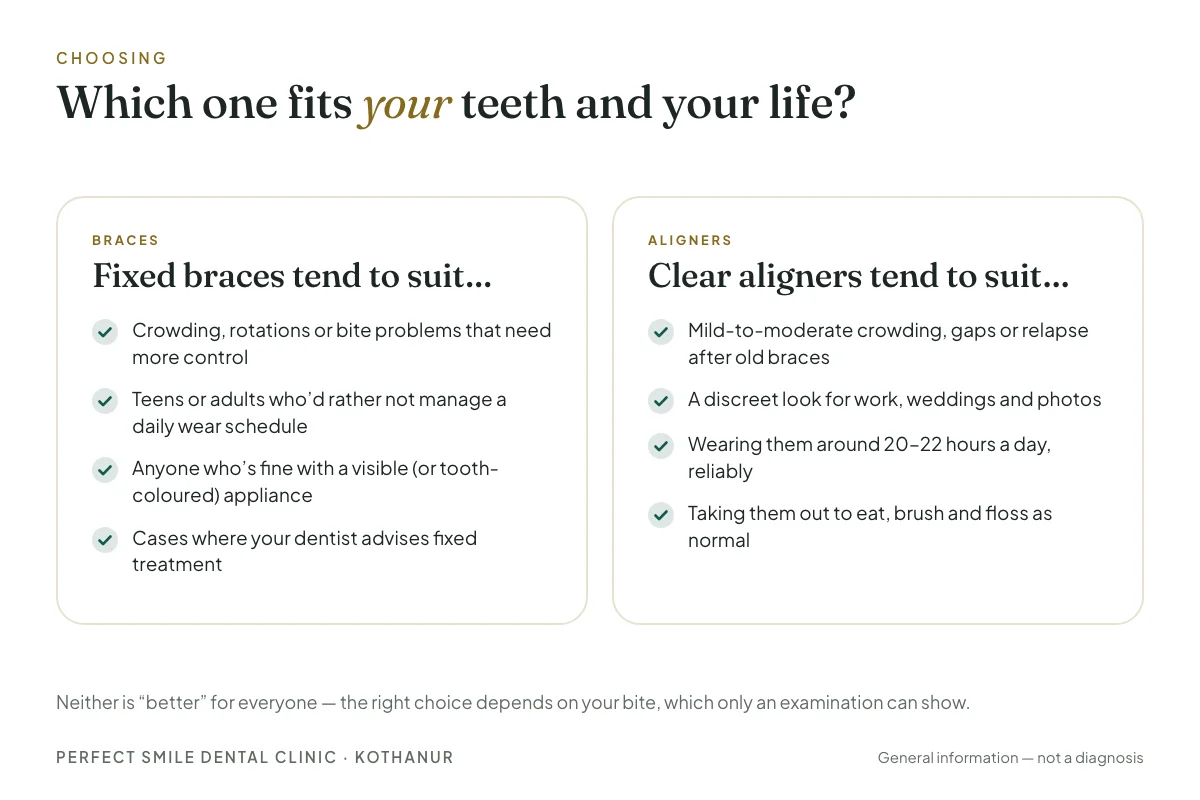
Your teeth and bite are the biggest factor. Some movements — such as rotating certain teeth, closing larger gaps, or correcting a significant overbite or underbite — are more predictable with fixed braces. Many cases of mild-to-moderate crowding, small gaps, or teeth that have drifted after old braces do well with aligners.
Your habits matter just as much. Aligners reward people who are organised and self-disciplined; they only work when they're in your mouth. If you tend to forget, or you'd rather not think about it, fixed braces do the work for you.
What treatment actually looks like
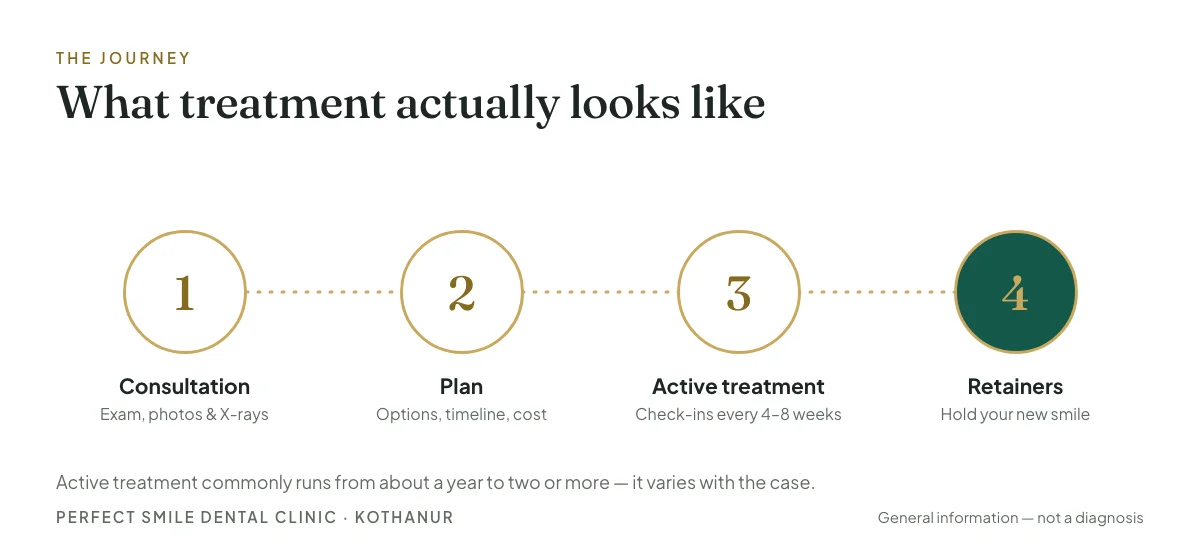
Whichever route you take, the journey is similar:
- Consultation — we examine your teeth and gums, take photos and X-rays, and talk about what bothers you about your smile.
- Plan — you'll hear which options are suitable, how long we expect treatment to take and what it will cost.
- Active treatment — braces are adjusted every few weeks; aligners are changed at home with check-ins in between.
- Retainers — once the teeth are in position, a retainer holds them there.

How long will it take?
Most people are in treatment for somewhere between one and three years, with a lot of adult cases landing around the one-to-two-year mark. Mild issues can be faster; complex bites take longer. Be a little wary of anyone who promises an exact number of months before they've examined you.
The part nobody talks about: retainers
Straight teeth don't stay straight on their own. Once braces or aligners come off, teeth have a tendency to drift back toward where they started, so a retainer is part of the treatment, not an optional extra. Plan on wearing one — often at night — for the long term. It's a small habit that protects a big investment.
Looking after your teeth during treatment
Braces and aligners both make good hygiene more important, not less. Food and plaque trapped around brackets can cause permanent marks on enamel and gum problems.
- Brush after meals and before bed with fluoride toothpaste; use interdental brushes around braces, or floss as normal with aligners.
- With braces, avoid hard, sticky and chewy foods — popcorn, hard candy, whole apples, chewing gum — that can break wires and brackets.
- With aligners, brush before putting them back in, and only drink water while they're in.
- Keep up your regular check-ups and cleanings throughout.
Do you need your teeth checked first?
Yes — and it's worth doing even if you've already decided what you want. Cavities and gum disease should be treated before any tooth movement begins, and some teeth may need attention (for example, an old root canal tooth or crown) that affects the plan. A proper assessment also tells us whether you're a good candidate for aligners, braces, or something simpler.
So, which should you choose?
Don't pick the one you saw on Instagram — pick the one that suits your teeth. Come in for a consultation, and we'll explain what each option would involve for you, how long it's likely to take and what it will cost, with no pressure to decide on the day.
Quick answers
Frequently asked questions
Is Invisalign better than braces?
Not automatically. Invisalign and other clear aligners can be a great, discreet option for many mild-to-moderate alignment problems, while fixed braces give your dentist more control and are often preferred for more complex bite or tooth-movement problems. The better choice is the one that suits your teeth and your lifestyle, which an examination will show.
How long does treatment take with braces or aligners?
Most adult treatment runs from about a year to two years, and some cases take longer. Mild alignment problems can be quicker; complex ones take more time. Your dentist can give you a realistic estimate after examining you and taking records such as photos and X-rays.
Am I too old for braces?
No. Teeth can be moved at any age as long as your teeth and gums are healthy, and many adults in their 20s, 30s, 40s and beyond have treatment. Healthy gums and bone matter more than your age.
Does Invisalign hurt?
Most people feel pressure or mild soreness for a few days when they start a new set of aligners, which settles quickly. Fixed braces can feel sore for a few days after they're fitted and after adjustments. Soft food and simple pain relief as advised by your dentist usually help.
Do I need a retainer after braces or aligners?
Yes. Teeth have a natural tendency to drift back, so a retainer is needed after treatment to hold them in their new positions. Your dentist will tell you how long and how often to wear it — often a fixed or removable retainer at night for the long term.
Can I eat normally with Invisalign?
Yes — aligners are removed to eat and drink anything other than water, so there are no food restrictions beyond cleaning your teeth before putting them back in. With fixed braces you'll need to avoid hard, sticky and very chewy foods that can damage brackets and wires.
How much do braces or Invisalign cost in Bengaluru?
The cost depends on how complex your case is, how long treatment is expected to take and which type of appliance is suitable, so we can only give a fair estimate after examining you. At Perfect Smile we explain your options and costs clearly up front, before you commit to anything.
Sources & further reading
This article is general information, not a diagnosis or a substitute for a dental examination. Every mouth is different — please see a dentist about your own situation.
Come and see us in Kothanur
Book a visit with Dr. Shilpa and the team — we’ll take a look, explain what we find in plain language, and talk you through your options. No pressure.