Treatments
Is a Root Canal Painful? What to Expect, Step by Step
If the words "root canal" make your stomach drop, you're in very good company. It's probably the most dreaded phrase in dentistry — and, in our experience, one of the most misunderstood.
Here's the reassuring truth we tell every nervous patient at our clinic in Kothanur: a root canal is the treatment that stops the pain, not the thing that causes it. Let's walk through exactly what it is, what happens in the chair, and what recovery really feels like — so there are no surprises.
Why root canals have such a scary reputation
The reputation is decades old. Years ago, anaesthetics and equipment were less refined, and many people only turned up once the tooth was badly infected and already agony. The pain got attached to the procedure in people's minds — and the story stuck.
Today the picture is very different. With effective local anaesthetic, careful technique and good X-ray imaging, a root canal feels much closer to having a large filling done. The throbbing toothache that sends people to the dentist is caused by the infected or inflamed nerve tissue inside the tooth, and removing that tissue is what brings relief.
What is a root canal, actually?
Every tooth has a soft centre called the pulp — a bundle of nerves and blood vessels that runs from the crown, through narrow channels (the root canals), down into the jaw bone. The pulp helps a tooth grow while you're young, but a fully grown tooth can survive without it, because it's nourished by the surrounding tissues.
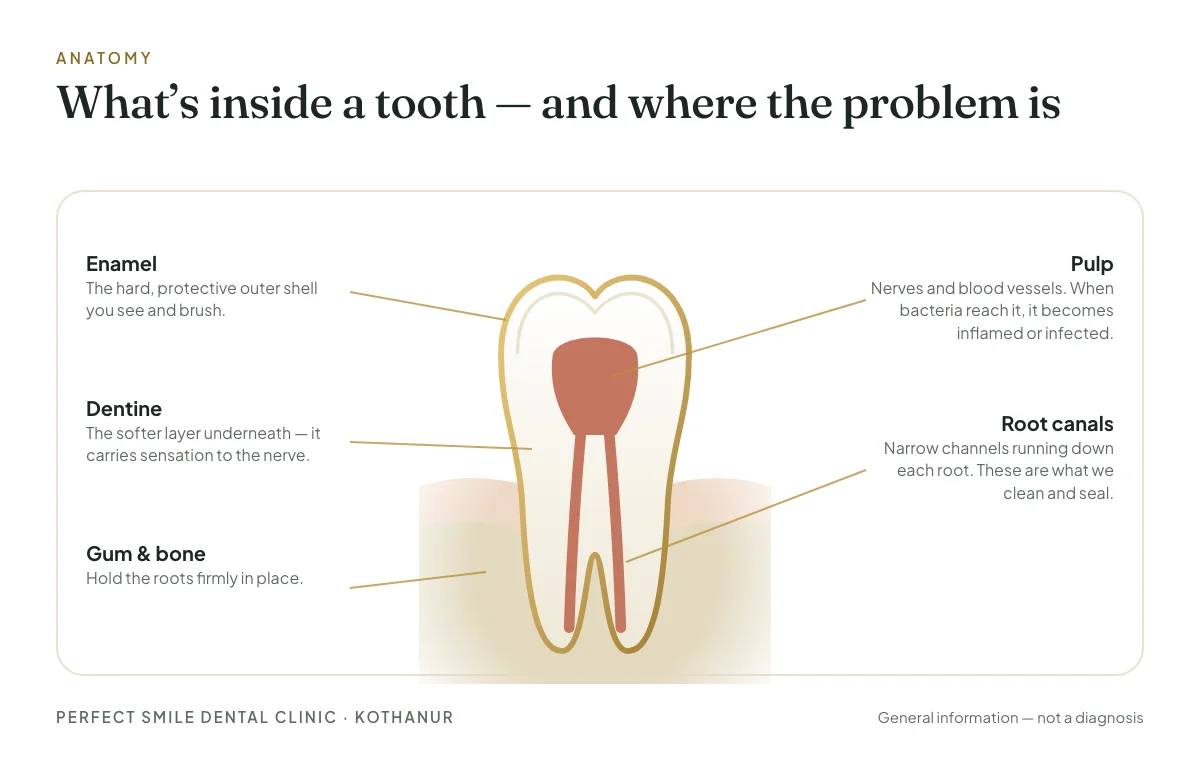
When bacteria reach the pulp — through deep decay, a crack, a leaking old filling or an injury — it becomes inflamed or infected. It can't heal itself, and the infection can spread to the bone around the root tip, forming an abscess. A root canal treatment removes the damaged pulp, thoroughly cleans the inside of the tooth, and seals it so the infection can't return. The tooth stays in your mouth, working as before.
Signs you might need one
Teeth can be sneaky: sometimes an infected tooth gives no symptoms at all and is only spotted on an X-ray. When there are symptoms, they usually include:
- A severe or throbbing toothache — especially one that wakes you at night
- Pain when you bite down or press on the tooth
- Sensitivity to hot or cold that lingers after the drink or food is gone
- A tooth that has darkened compared with its neighbours
- Swelling, tenderness or a small pimple-like bump on the gum near the tooth
Pain that suddenly stops is not always good news — it can mean the nerve has died while the infection is still there.
Swelling of the face or jaw, a fever, or difficulty swallowing alongside tooth pain should be seen the same day. We see dental emergencies on the day, so don't wait.
What happens during a root canal, step by step
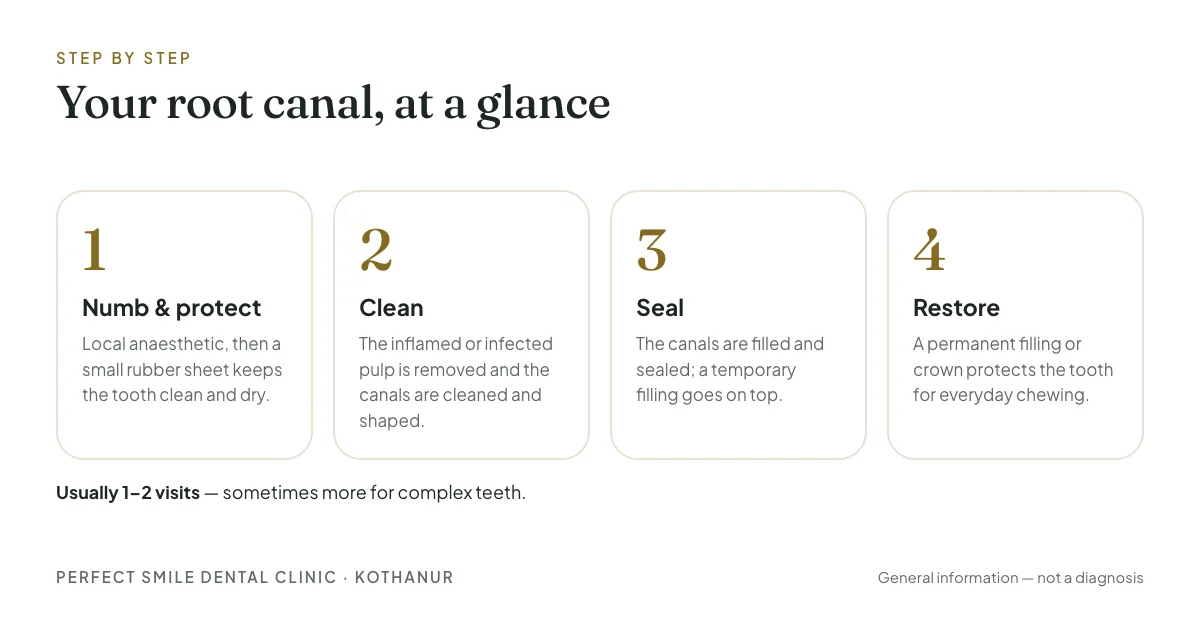
Knowing the sequence takes much of the fear out of it. This is what to expect:
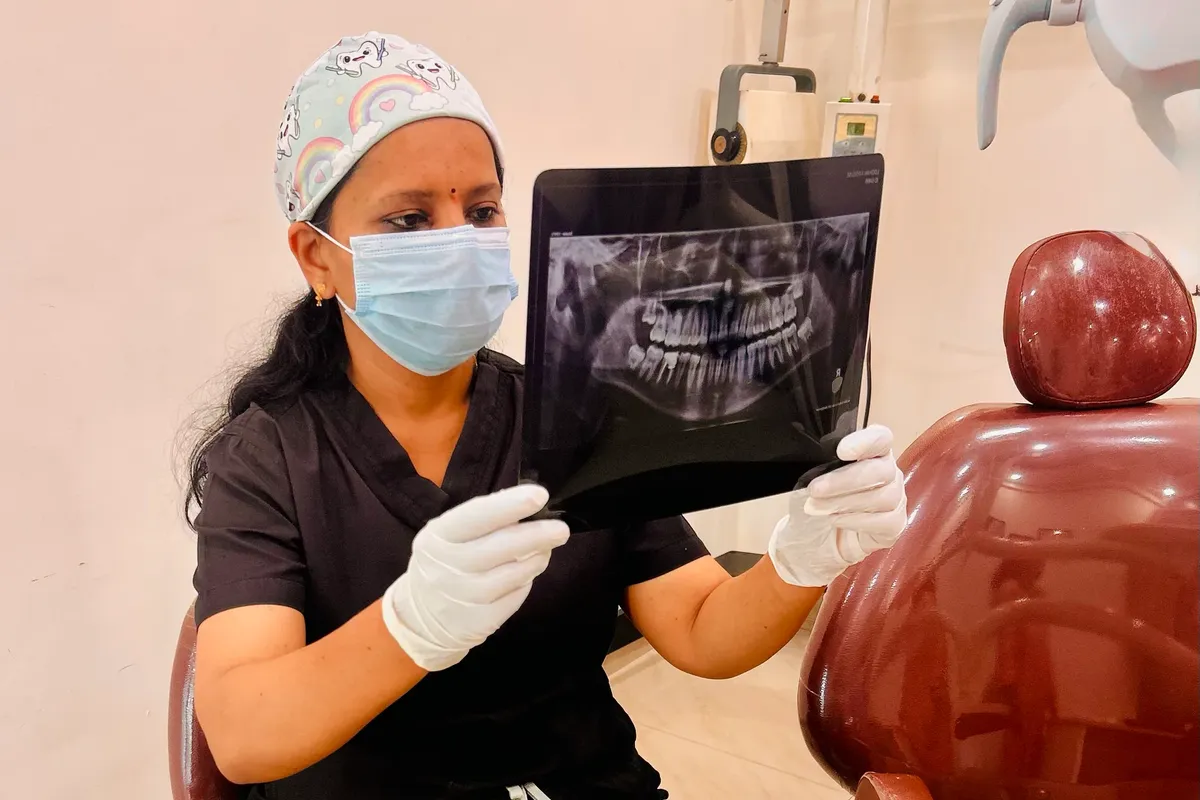
- Examination and X-ray. We check the tooth, take an X-ray to see the shape of the roots and any infection, and explain what we find and your options.
- Numbing. A local anaesthetic is given so the tooth and surrounding area are completely numb. We wait until you're comfortable before starting — tell us if you can feel anything, and we'll top it up.
- Protecting the tooth. A small rubber sheet isolates the tooth, keeping it clean and dry and stopping anything from reaching the back of your throat.
- Cleaning the canals. A small opening is made in the top of the tooth. The inflamed or infected pulp is removed, and the canals are carefully cleaned and shaped using fine instruments and disinfecting solutions.
- Sealing. The cleaned canals are filled with a rubber-like material and sealed. A temporary filling usually goes on top.
- Restoring. At a follow-up visit, the tooth gets a permanent filling or crown to protect it for everyday chewing.
How long does a root canal take?
Many root canals are finished in one or two visits, each lasting roughly one to two hours. A tooth with several canals, curved roots or an active abscess can take longer or need another appointment — a medicine may be placed inside the tooth between visits to settle the infection first. We'll give you a realistic plan after the X-ray, not a guess.
What recovery feels like
- While you're numb: Your lip, cheek or tongue may feel heavy for a few hours. Wait for the numbness to fade before eating.
- First few days: Mild tenderness when you bite is common as the tissues around the root settle. Your dentist will advise which over-the-counter pain relief is suitable for you.
- Up to a couple of weeks: The area around the tooth can stay a little sore or swollen for a short time. Gradual improvement is the pattern to expect.
- Call us if: pain is getting worse rather than better, swelling spreads, you have a fever, or the temporary filling falls out.
Until the permanent restoration is done, chew on the other side and avoid hard or sticky food on the treated tooth.
Why a crown often follows
A tooth that has needed a root canal has usually lost a lot of its structure to decay or a large filling, and without its pulp it can become more brittle over time. That's why back teeth — which take the heaviest chewing forces — commonly get a crown afterwards. Front teeth sometimes manage well with a good filling alone. We'll tell you which is sensible for your tooth.
What happens if you put it off?
It's tempting to wait when a toothache calms down — but the infection doesn't go away on its own. Antibiotics can help control a spreading infection, but they can't remove the infected pulp inside the tooth. Left alone, it can lead to an abscess, bone loss around the root, swelling that spreads, and eventually the loss of the tooth. A root canal done early is almost always simpler, shorter and less expensive than treating a serious abscess later.
Root canal or extraction?
If a tooth can be restored, saving it is usually the better choice: you keep your own tooth and bite, and avoid the extra steps and cost of replacing a missing tooth with an implant or bridge. If it's too badly broken down to rebuild, extraction may be the better route — and we'll say so plainly. The point of the consultation is to give you honest options, never pressure.
Ready to get that tooth looked at?
Whether it's a nagging ache or a full-blown toothache, the sooner we see it, the simpler the fix. You can read about how we approach root canal treatment on our treatments page, or simply message us to book a visit — we're in Kothanur, easy to reach from Hennur, Kalyan Nagar, HRBR Layout and Byrathi.
Quick answers
Frequently asked questions
Is a root canal painful?
The treatment itself shouldn't be. The tooth and the area around it are numbed with local anaesthetic before we begin, so you may feel pressure or vibration but not pain. Some tenderness for a few days afterwards is normal and is usually managed with simple pain relief as advised by your dentist.
How long does a root canal take?
Many root canals are completed in one or two visits, and each visit usually takes somewhere between one and two hours. Teeth with several canals, curved roots or an active infection can take longer or need an extra appointment. We'll tell you what to expect after examining the tooth and taking an X-ray.
Can I eat and go back to work after a root canal?
Most people return to normal activities the same day. Avoid eating until the numbness wears off so you don't bite your cheek or tongue, and chew on the other side until the tooth has its permanent filling or crown.
How long does a root-canal-treated tooth last?
With a good permanent restoration (often a crown on back teeth) and normal care — brushing twice a day, cleaning between teeth and regular check-ups — a root-treated tooth can last many years, often a lifetime.
Is it better to pull the tooth than to have a root canal?
When a tooth can be restored, keeping your natural tooth is usually the better option: it keeps chewing and the surrounding teeth stable, and avoids the extra steps of replacing a missing tooth with an implant or bridge. Extraction is sometimes the right call, for example when a tooth is too damaged to restore, and we'll explain both options honestly.
What are the signs I might need a root canal?
Common signs include a severe or throbbing toothache, pain when you bite or press on the tooth, sensitivity to hot or cold that lingers after the drink is gone, a darkening tooth, and a swelling or small pimple-like bump on the gum. Facial swelling or fever with tooth pain needs urgent attention. Only an examination and X-ray can confirm what's going on.
How much does a root canal cost in Bengaluru?
The cost depends on which tooth it is, how many canals it has, how complicated the case is, and whether it needs a crown afterwards, so a fair figure can only be given after an examination and X-ray. At Perfect Smile we explain the plan and the cost clearly before any treatment begins — no surprises.
Sources & further reading
This article is general information, not a diagnosis or a substitute for a dental examination. Every mouth is different — please see a dentist about your own situation.
Come and see us in Kothanur
Book a visit with Dr. Shilpa and the team — we’ll take a look, explain what we find in plain language, and talk you through your options. No pressure.