Dental Tips
Teeth Whitening: Is It Safe and How Long Does It Last?
A brighter smile is probably the most common request we hear from adults who walk in with nothing wrong — a wedding coming up, a new job, or years of daily chai catching up with them. And nearly everyone asks the same two questions: is it safe, and will it last?
Short answers: yes, when it's done properly — and for a while, depending on you. Here's the long version.
What causes teeth to stain or darken?
Teeth don't have a single "natural" shade, and several things affect how bright they look:
- Surface (extrinsic) stains from chai, coffee, tea, red wine, cola, curry, smoking, paan and gutka. These sit on or just beneath the surface of the enamel.
- Natural ageing. Enamel thins over the years, letting the yellower dentine beneath show through.
- Deeper (intrinsic) discolouration from certain medicines taken in childhood, fluorosis, trauma to a tooth, or a tooth whose nerve has died.
Knowing which type you have matters, because whitening works very differently on each.
How teeth whitening works
Professional whitening uses a peroxide-based gel that breaks down the pigment molecules trapped in the tooth, so the tooth reflects more light. It lightens the natural colour of your teeth — it doesn't scrub or coat them.
Dentists generally use one of two routes, and we'll recommend what suits your teeth:
- In-clinic whitening. A stronger gel is applied by the dentist with your gums protected, for faster, more noticeable results in a single visit.
- Dentist-supervised take-home kits. Custom-fitted trays and a milder gel, worn for short periods over a number of days. Slower, but gentle and easy to top up later.
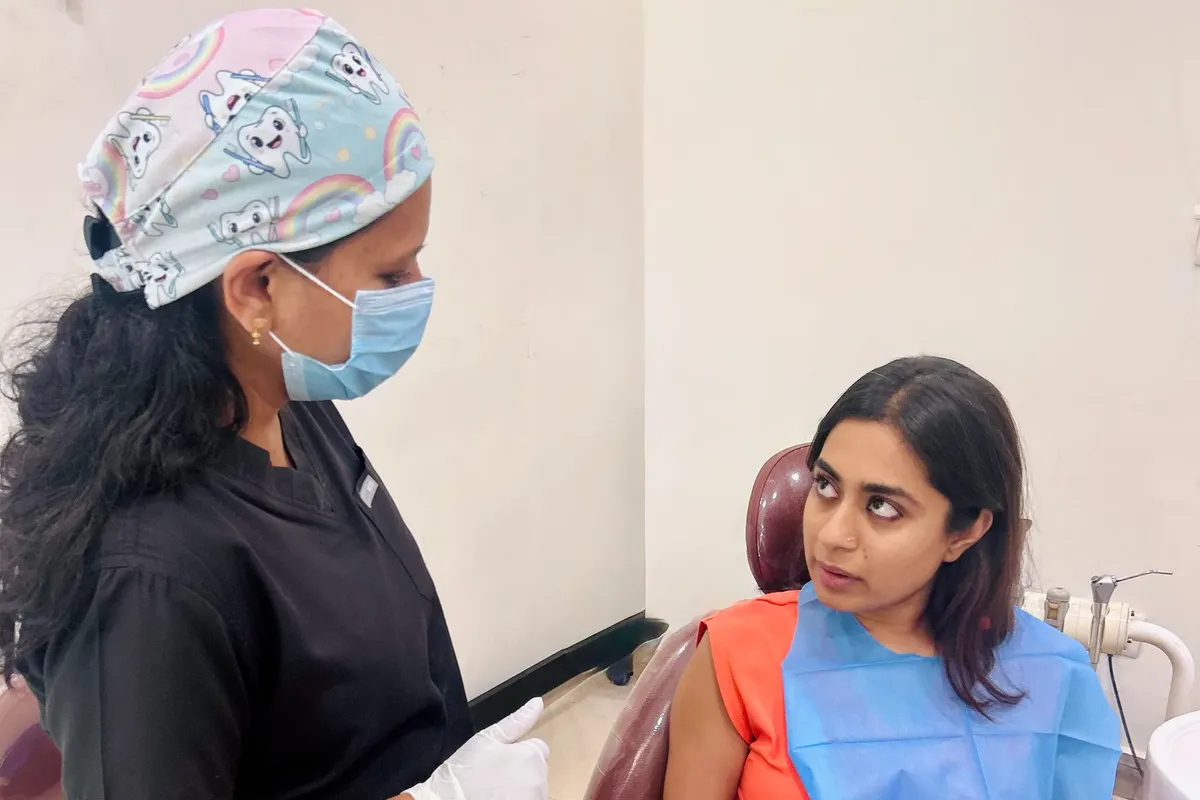
Is teeth whitening safe?
When it's carried out by a dentist after checking your teeth and gums, whitening is generally considered safe. The key words are after checking. The products are strong chemicals, which is why health services such as the NHS advise having whitening done by a dental professional — and warn that beauty-salon, pharmacy and online kits can be less effective and may harm teeth and gums.
Before we whiten, we check for:
- Cavities, cracks and worn areas (whitening gel on an untreated cavity hurts)
- Gum disease or receding gums
- Existing crowns, veneers and fillings that won't change colour
- How sensitive your teeth already are
Does it hurt? Sensitivity and other side effects
The most common effect is temporary sensitivity to cold or sweet things, sometimes with mildly irritated gums or white patches on the gum that fade. These usually settle within a day or two. If you're prone to sensitivity, tell us — we can use a gentler gel, shorter sessions or desensitising products. Don't push through sharp or lingering pain.
What whitening can and can't do
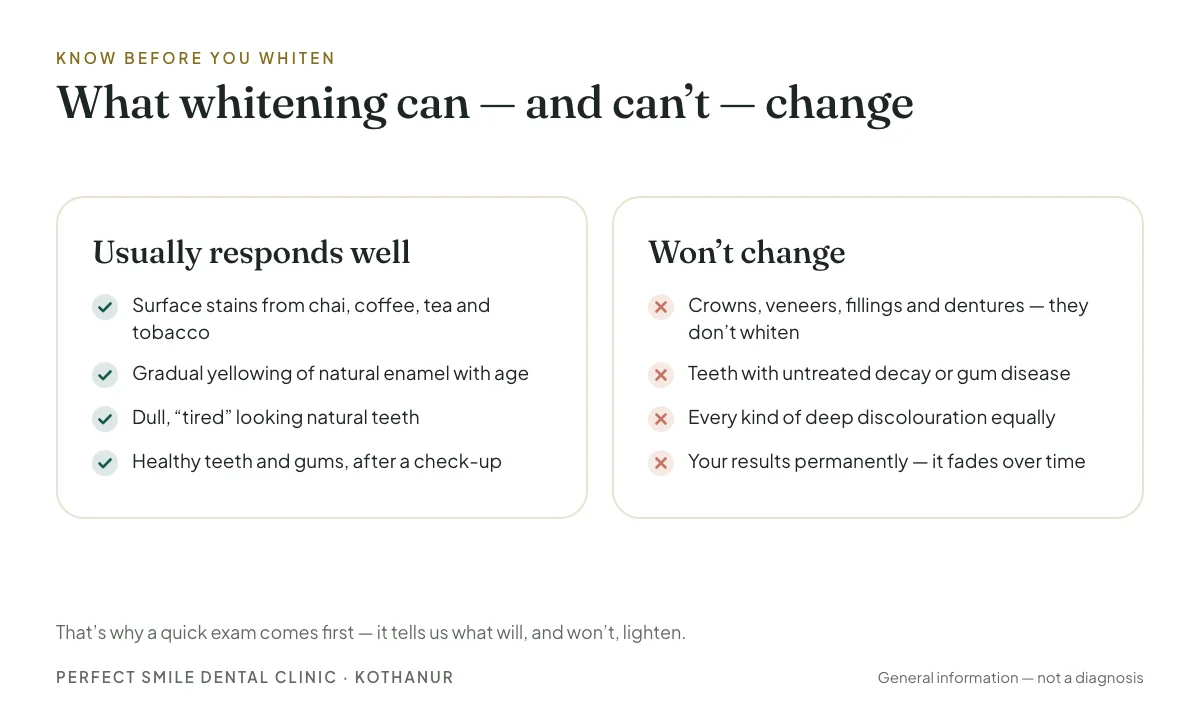
The big one is restorations: crowns, veneers, fillings and dentures don't whiten. If you have a visible tooth-coloured filling or crown at the front, the order of treatment matters — we'll usually whiten first, then match any replacements to your new shade.
How long do the results last?
Whitening isn't permanent, but it isn't brief either. Depending on your habits, results commonly last from several months to a couple of years or more (the NHS suggests around three years with good care). Your lifestyle decides where in that range you land:
- Daily chai or coffee and tobacco bring staining back faster.
- Good brushing, regular cleanings and rinsing after stain-heavy drinks slow it down.
- Many people book a quick top-up once a year or so.
Whitening and the Indian diet
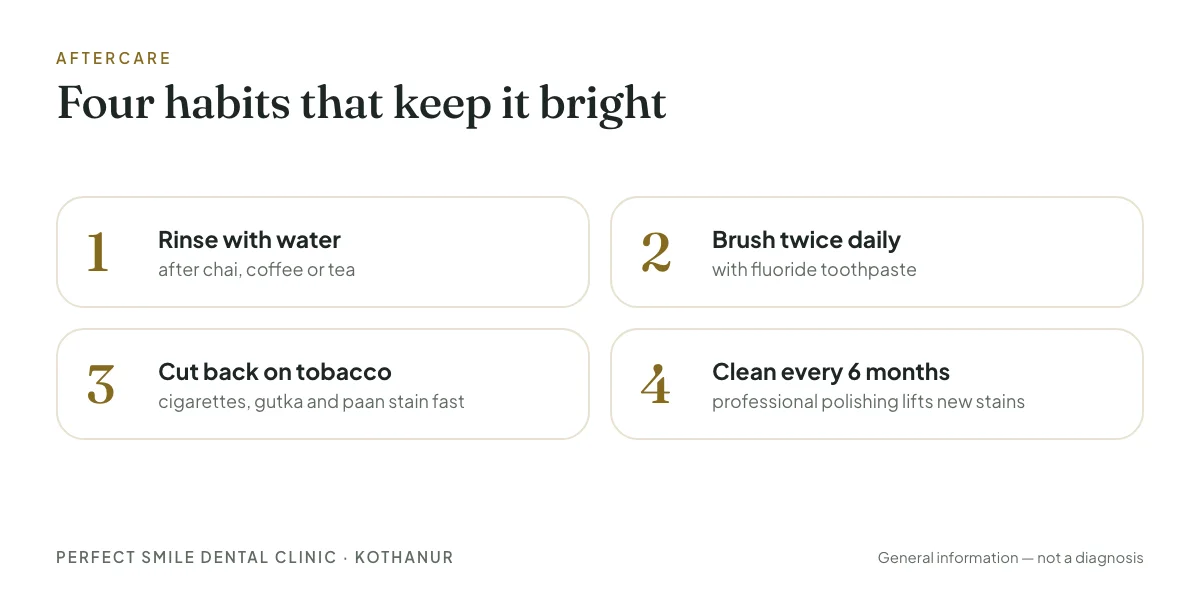
Chai and filter coffee are worth a special mention, since most of our patients enjoy both. The tannins in tea and the pigments in coffee cling to enamel, and sipping all day gives them more time to do it. You don't have to give them up:
- Sip with meals or in one sitting rather than all day
- Rinse your mouth with plain water afterwards
- Brush with fluoride toothpaste morning and night
- Treat tobacco, paan and gutka as the stain-makers they are — and, far more importantly, as serious risks to your oral health
Home remedies: please skip them
Baking soda scrubs, lemon juice, activated charcoal and "whitening" hacks from social media tend to either do nothing or wear away enamel. Once enamel is thin, the yellower dentine beneath shows through, so these can leave teeth darker and more sensitive. Whitening toothpastes can gently lift surface stains but won't change the underlying shade.
Start with a clean slate
Many stains sit on the surface and come off with a professional scale and polish, which is why a cleaning and check-up is a sensible first step. Whitening comes after, and if the shape or alignment of your teeth bothers you more than the colour, we can talk through wider cosmetic options too — from braces and clear aligners to veneers and crowns. If tooth pain is the real issue, that comes first — see our guide to root canal treatment.
Ready to brighten your smile?
Come in for a quick check-up and we'll tell you honestly whether whitening is right for you, what shade change to realistically expect, and how to keep it.
Quick answers
Frequently asked questions
Is teeth whitening safe?
When it's done by a dentist after a check-up, whitening is generally considered safe. The most common side effects are temporary sensitivity and sometimes mild gum irritation. Kits from salons or unregulated online sellers can be stronger or less well controlled than they appear, so it's best to have your teeth and gums assessed first.
Does whitening damage enamel?
Professionally supervised whitening is not expected to damage healthy enamel when used as directed. Overusing strong products or using them on teeth with untreated decay, cracks or gum problems can cause pain and irritation, which is why a dental check-up comes first.
How long do whitening results last?
Whitening isn't permanent. Results commonly last from several months to around two or three years, depending on how much staining you're exposed to — chai, coffee, tea, red wine, cigarettes, paan and gutka all dull teeth again — and how well you look after your teeth.
Will whitening remove chai and coffee stains?
Usually yes, for surface staining on natural teeth. Chai, coffee and tea stains are among the things whitening responds to best. Heavier or deeper discolouration may only lighten partially, and a professional cleaning is often done first to remove stain sitting on the surface.
Will whitening work on crowns, veneers or fillings?
No. Whitening only lightens natural tooth structure, so crowns, veneers, fillings and dentures stay the same colour. If you have visible restorations, your dentist can plan the order of treatment so the colours match after whitening.
Who shouldn't whiten their teeth?
Whitening is generally not advised for anyone under 18, during pregnancy or breastfeeding, or if you have untreated decay, active gum disease or a lot of sensitivity until these are treated. Your dentist will check whether it's suitable for you.
Can I whiten my teeth at home with baking soda or lemon?
We'd advise against it. Lemon and other acidic home remedies can erode enamel, and abrasive scrubs can wear it down, making teeth more sensitive and, over time, more yellow as the darker dentine shows through. Professional whitening or a dentist-supervised take-home kit is safer and more reliable.
Sources & further reading
This article is general information, not a diagnosis or a substitute for a dental examination. Every mouth is different — please see a dentist about your own situation.
Come and see us in Kothanur
Book a visit with Dr. Shilpa and the team — we’ll take a look, explain what we find in plain language, and talk you through your options. No pressure.
Keep reading
All articles Treatments
Braces vs Invisalign for Adults: Which Is Right for You?
Thinking about straightening your teeth as an adult? An honest, side-by-side look at fixed braces and clear aligners — how they work, how long they take and who each suits.
Read article Treatments
Is a Root Canal Painful? What to Expect, Step by Step
The honest answer to the question every patient asks — plus what actually happens in the chair, how long it takes, and what recovery feels like.
Read article