Dental Tips
Why Do My Gums Bleed When I Brush? Causes, Fixes & When to Worry
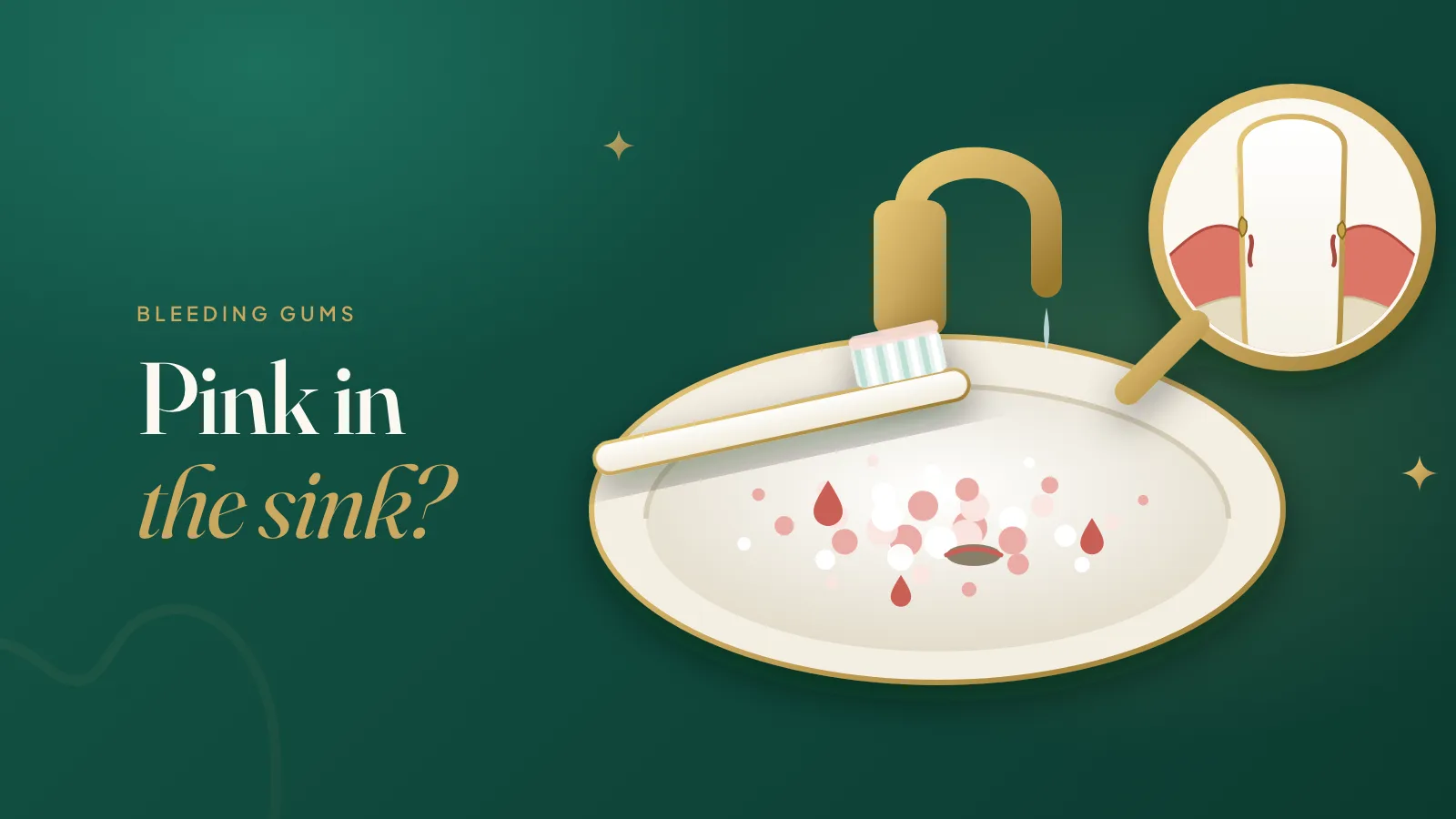
You spit after brushing and there it is — a streak of pink in the sink. Most people shrug it off, especially when it doesn't hurt. It's one of the most common things we see at our clinic in Kothanur, and one of the most worth catching early.
Here's the short version: bleeding gums are usually your gums telling you they're inflamed, and in most cases that's very fixable. Below we explain what's going on, what you can do at home starting tonight, and the signs that mean it's time to get them looked at.
What bleeding gums usually mean
Plaque is the soft, sticky film of bacteria that builds up on teeth every day. When it sits along the gum line, the gums react by becoming red, puffy and tender — and those inflamed gums bleed easily when a toothbrush or floss touches them. This early stage is called gingivitis.
If plaque isn't removed, it hardens into tartar (also called calculus), which a toothbrush can't shift. Tartar holds even more bacteria against the gums, and the inflammation can creep deeper — the stage called periodontitis.
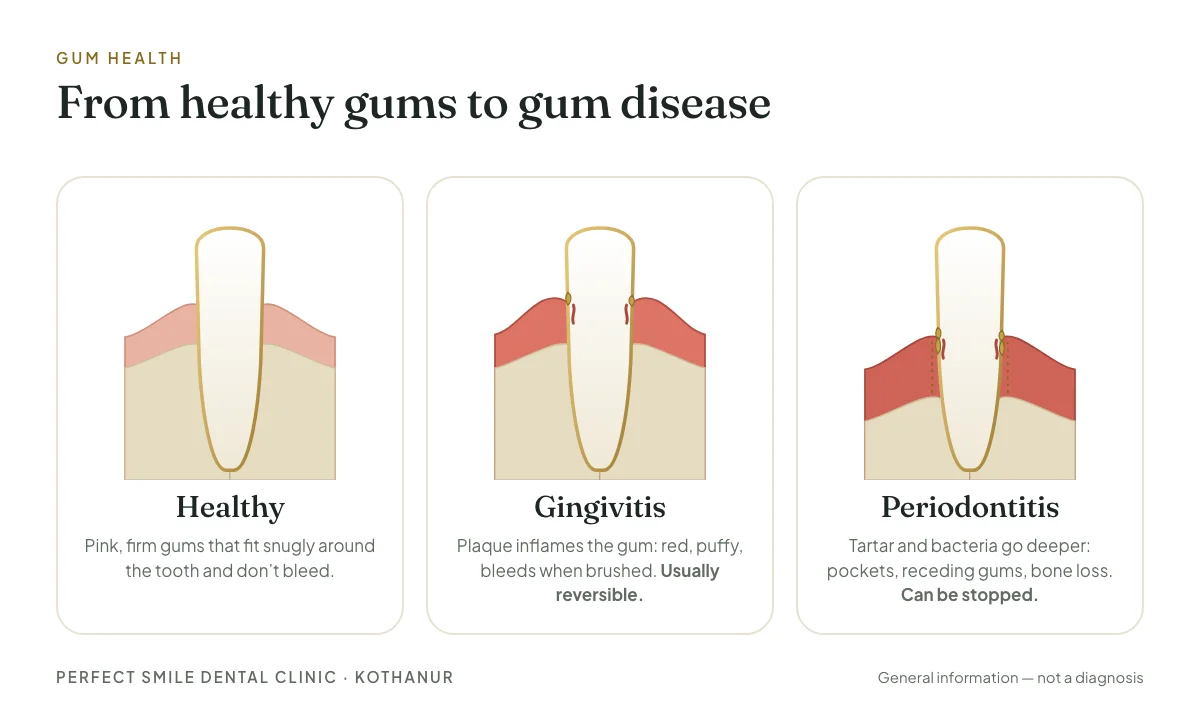
The good news: gingivitis is usually reversible. Periodontitis can't be fully undone, but it can be stopped — and the earlier it's caught, the more of your gum and bone you keep.
Other common causes
Plaque is behind most bleeding gums, but other things can make it more likely or worse:
- Brushing too hard or with a hard-bristled brush.
- Starting to floss — a little bleeding for the first week or so is common and usually settles.
- Pregnancy and hormonal changes, which make gums more reactive to plaque.
- Diabetes, especially when blood sugar isn't well controlled — gum disease and diabetes can make each other worse.
- Medicines such as blood thinners, and some that cause a dry mouth.
- Smoking and chewing tobacco — and note that smoking can hide bleeding by reducing blood flow to the gums, so no bleeding doesn't always mean healthy gums.
- Braces, dentures or crowns that trap plaque or don't fit well.
- Low vitamin C or K in the diet — less common, but possible.
What you can do at home, starting tonight
- Don't stop brushing the bleeding area. It's tempting, but it lets plaque build up and the bleeding gets worse. Be gentle, not absent.
- Brush twice a day for two minutes with a soft-bristled (or electric) brush and fluoride toothpaste. Angle the bristles towards the gum line and use small, gentle circles.
- Clean between your teeth once a day with floss or interdental brushes. This is where gingivitis usually starts, because a toothbrush can't reach.
- Spit, don't rinse after brushing, so the fluoride keeps working.
- Cut back on sugary snacks and drinks and, if you smoke or chew tobacco, ask us about help to stop — it's one of the biggest risk factors for gum disease.
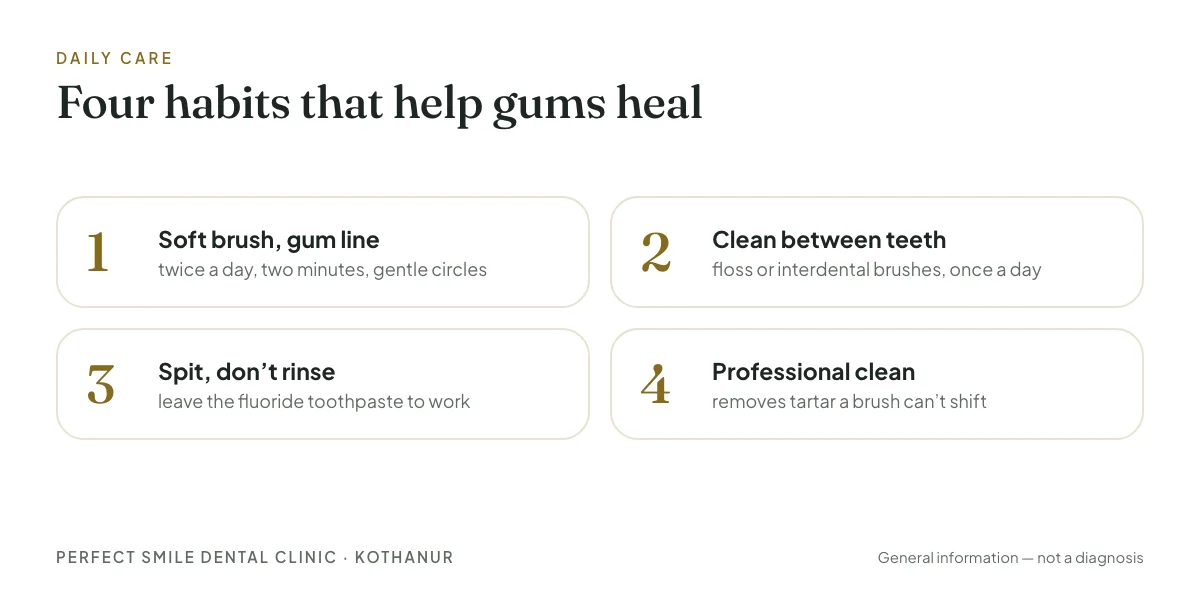
With consistent care, many people see the bleeding reduce within one to two weeks. If it doesn't, there's probably tartar that only a professional clean can remove.
When to see a dentist
Book a check-up if:
- Bleeding hasn't settled after about two weeks of careful brushing and cleaning between your teeth.
- Your gums are swollen, red, receding or pulling away from the teeth.
- You have bad breath or a bad taste that doesn't go away.
- Teeth feel loose, have moved, or your bite feels different.
- You're pregnant, have diabetes, or take medicines that affect bleeding.
Get help sooner if there's pus, a painful swelling on the gum, or a fever — that can be a gum abscess. And if bleeding gums come with easy bruising, frequent nosebleeds or unexplained tiredness, see a doctor as well, as these can occasionally point to a medical cause. We see dental emergencies on the day.
What happens at the clinic
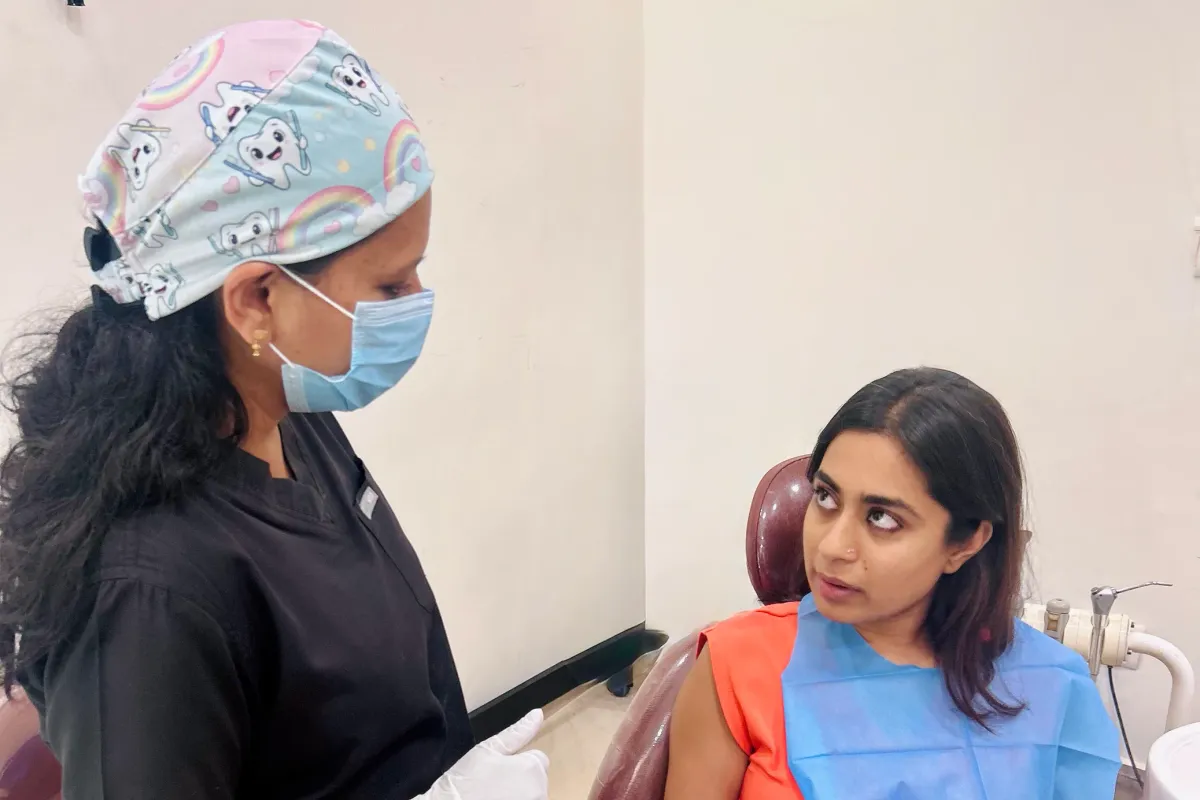
- A gum check. We look at your gums and gently measure the small space between gum and tooth to see whether it's gingivitis or something deeper. X-rays may be taken to check the bone.
- A professional clean. A scale and polish removes tartar from above and just below the gum line — the main thing your gums need to heal.
- Deeper cleaning if needed. For periodontitis, the roots are cleaned below the gum line, usually with local anaesthetic so you're comfortable.
- A plan you can keep. Practical advice on brushing, the right interdental brush size and how often to come back — often every three to six months while gums recover.
Gums may feel a little tender for a day or two after a clean, and that settles as they get healthier.
Healthy gums protect more than your teeth
Gum disease is one of the most common reasons adults lose teeth — and losing teeth leads to bigger decisions later, like whether to choose an implant, a bridge or a denture. Research has also linked gum disease with wider health conditions, including diabetes. Looking after your gums now is one of the simplest investments in your health.
Book a gum check in Kothanur
If you've noticed pink in the sink, don't wait for it to hurt. Message us to book a check-up and clean — we're in Kothanur, easy to reach from Hennur, Kalyan Nagar, HRBR Layout and Byrathi. Planning to brighten your smile too? A clean comes first — here's what to know about teeth whitening.
Quick answers
Frequently asked questions
Is it normal for gums to bleed when brushing?
It's common, but it isn't normal. Healthy gums don't usually bleed with gentle brushing. Bleeding is most often a sign of gingivitis — inflammation caused by plaque along the gum line — which is usually reversible with better cleaning and a professional scale and polish.
Should I stop brushing if my gums bleed?
No. Avoiding the bleeding area lets more plaque build up and makes the inflammation worse. Keep brushing twice a day with a soft-bristled brush and fluoride toothpaste, using gentle strokes along the gum line, and clean between your teeth every day. As the gums heal, the bleeding usually reduces.
How long does it take for bleeding gums to stop?
When the cause is plaque-related gingivitis, many people notice less bleeding within one to two weeks of consistent, careful brushing and cleaning between the teeth. If it hasn't improved by then, or tartar has built up that brushing can't remove, book a check-up and cleaning.
Can bleeding gums be a sign of something serious?
Usually it's gum inflammation, but persistent bleeding can be a sign of more advanced gum disease (periodontitis), which can lead to loose teeth. Rarely, bleeding gums together with easy bruising, nosebleeds or unexplained tiredness can point to a medical problem, and you should see a doctor. Tell your dentist about any medicines you take, such as blood thinners.
Can gum disease be reversed?
Early gum disease (gingivitis) can usually be reversed with a professional clean and good daily cleaning at home. Advanced gum disease (periodontitis) causes damage to the bone and tissues supporting the teeth that can't be fully undone, but treatment can stop it getting worse and help you keep your teeth.
Do bleeding gums during pregnancy go away?
Hormonal changes in pregnancy make gums more sensitive to plaque, so bleeding is common. It often improves after the baby is born, but it's still worth seeing a dentist during pregnancy — dental check-ups and cleanings are generally safe and recommended.
Which mouthwash is best for bleeding gums?
A mouthwash can help but doesn't replace brushing and cleaning between your teeth, and it can't remove tartar. Your dentist may recommend a specific antiseptic mouthwash for a short period; it's best to ask, as some can stain teeth with long-term use.
Sources & further reading
- NHS — Gum disease
- American Dental Association (MouthHealthy) — Bleeding gums
- American Dental Association (MouthHealthy) — Gum disease
- National Institute of Dental and Craniofacial Research (NIH) — Gum disease
This article is general information, not a diagnosis or a substitute for a dental examination. Every mouth is different — please see a dentist about your own situation.
Come and see us in Kothanur
Book a visit with Dr. Shilpa and the team — we’ll take a look, explain what we find in plain language, and talk you through your options. No pressure.